

Up until the early 1960s bogie tank wagons were a rare thing. The Oakbank Oil company had a few that ended up with BP as did ESSO, the Americans brought some over with them during Wolrd War 2 and ICI had a large(ish) batch of rather lovely bogie caustic soda wagons but they were certainly not what you’d describe as common. Things changed in the mid-sixties with the arrival, in good number, of monobloc petroleum wagons but not long before this the last of the old breed appeared, the Murgatroyd’s bogie liquid chlorine wagons.
The first wagon appeared in late 1956 and by the end of 1963 there were a total of 39. A further 4 monobloc tanks were delivered in 1970 but as they are well past my own period of interest they won’t be covered here. For those who are interested in the background to all of them I would recommend an article by Peter Fidczuk in Railway Archive number 15 and Paul Bartlett, of course, has numerous images on his website. They are a fascinating type and as they travelled down the Welsh Marches and into South Wales as far as Barry and later Baglan Bay they got my attention from a modelling point of view. They are notable for at least three ‘lasts’ for British Wagons and, as I discovered, they also have perhaps more variety than would first appear to the casual observer. This article, if you can call it that, sets out to explain and illustrate those visual differences using the 3D artwork I created for my models.
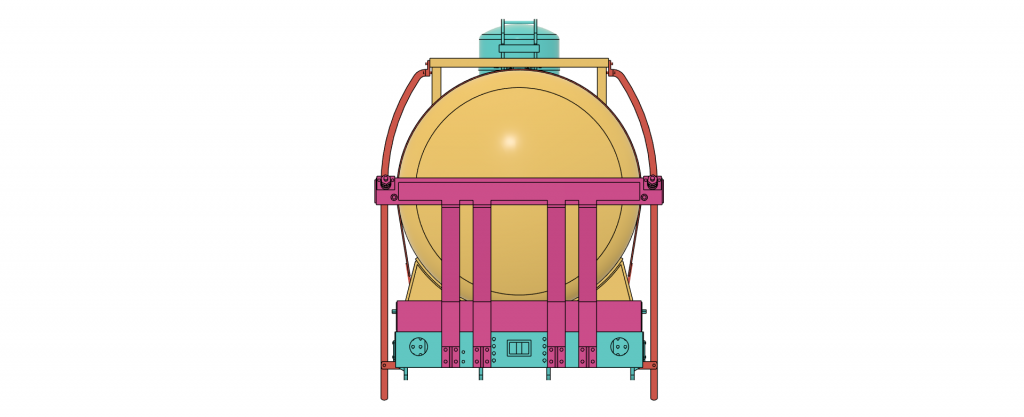
Amongst the 39 wagons built for Murgatroyd’s there are four basic types. I have grouped them by underframe as this seemed sensible, so we have type 1, type 2A, type 2B and type 3. This will be explained as we go along, starting with the first built in 1956/7.
Type 1 Built L&Y Wagon & Engineering Company & Grazebrook November 1956 to February 1957
Numbered T201 – T208 (L&Y Wagon T201 & T203-4, Grazebrook T202 & T205-8)
Before we get properly going there is something that should be made clear. No one, it seems, has an identifiable image of one of the wagons built by Grazebrook. There are clear images (i.e. showing the number) of the wagons built by L&Y and, given they were built at the same time, I assume that Grazebook wagons looked the same. I haven’t come across a fifth type in general images and type 1s crop up fairly frequently in general train images, so this seems likely but until someone comes up with a clear image it is an assumption.
So, to the wagons themselves. The type 1s were rated at 35T load and were massively built.
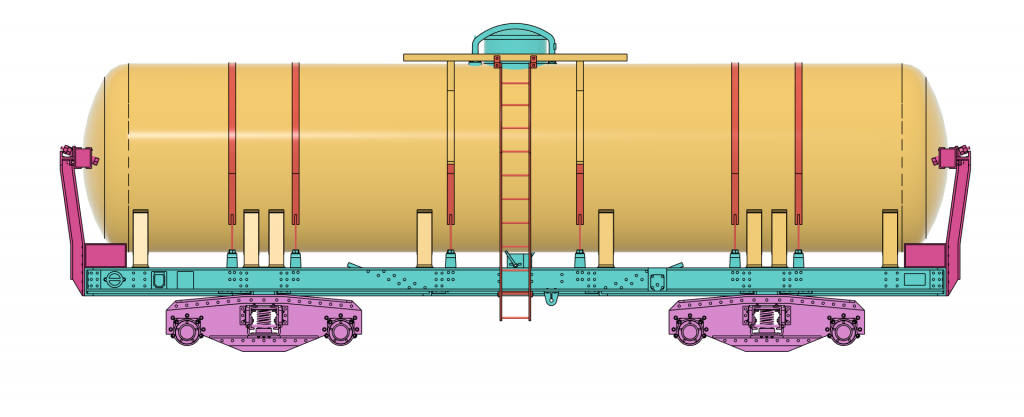
The underframes had 12” headstocks, main longitudinal and transverse framing with 10” solebars and were of riveted construction. The transverse framing was straight which is important with the other types that followed. They were originally built unfitted with Dean/Churchward brakes (in 1956!). These surely have to be the last wagons built with that brakegear type. Buffers were initially self contained types and they had screw couplings.
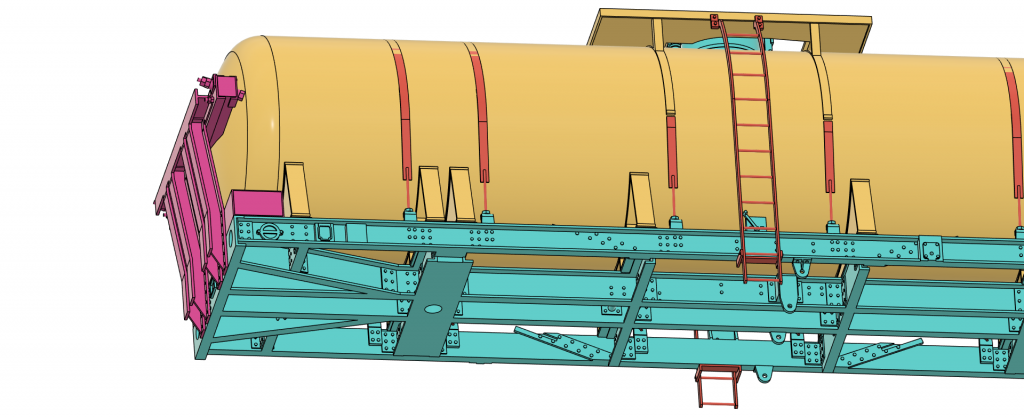
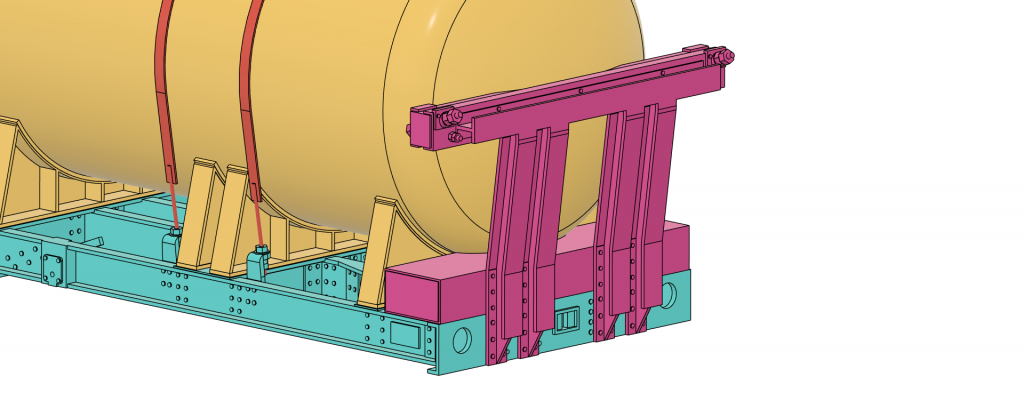
The tank sat upon 8 substantial steel saddles much like those found on the anchor mounted tank wagons and there were timber baulks at the bottom of the tank ends as well. The heavily reinforced cross beams at the ends of the tank were each supported by four stanchions. Given what followed, this would seem like overkill, but I guess they were, at least to begin with, taking no chances given the dangerous load.
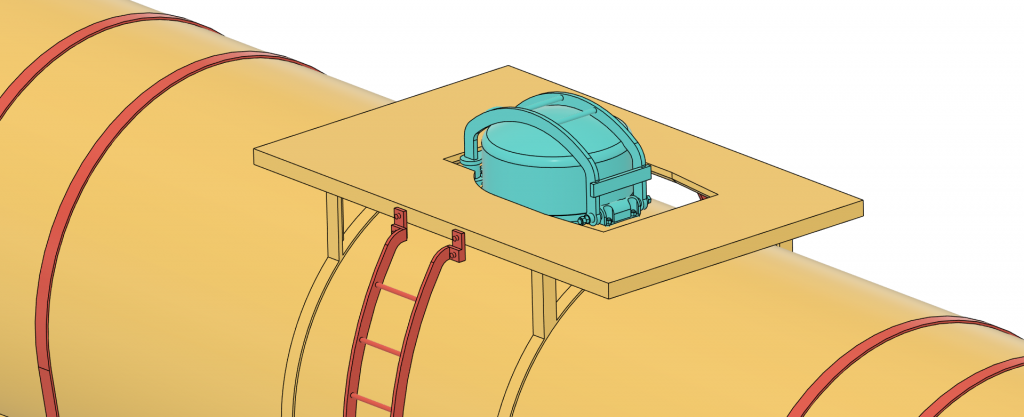
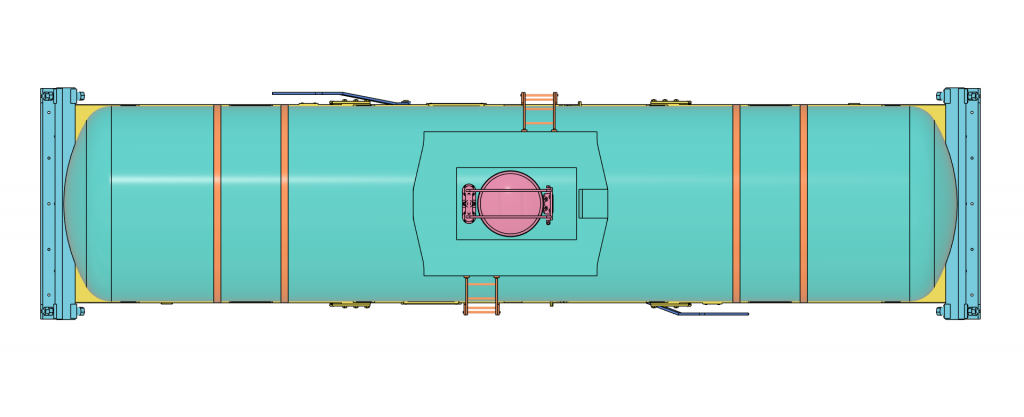
The manhole was another heavy duty affair and was perhaps the only thing that seemed to remain unchanged throughout the builds. Around it there was a substantial rectangular platform and centrally mounted ladders were provided.
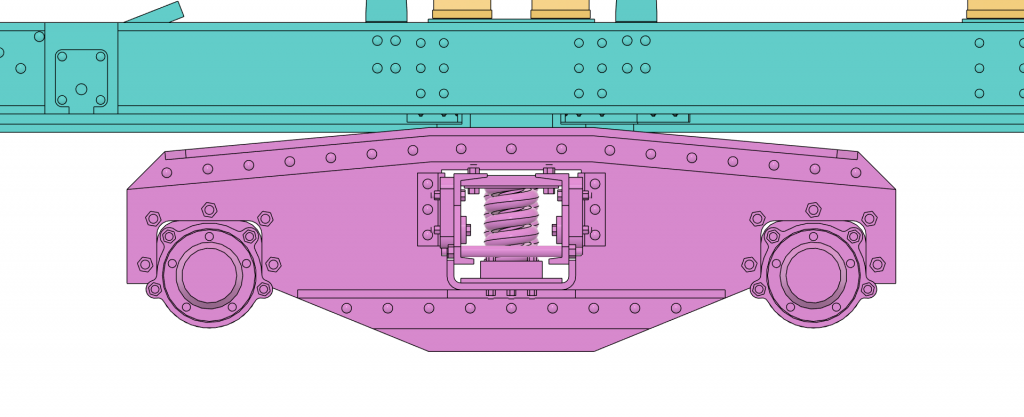
Bogies were the BR version of the GWR heavy duty plate bogie. This type saw use under various Crocodiles, Weltrols and the 1950s 42T bogie Strip Coil wagons. Journals were oil when built and the plate sideframes had no holes in them.
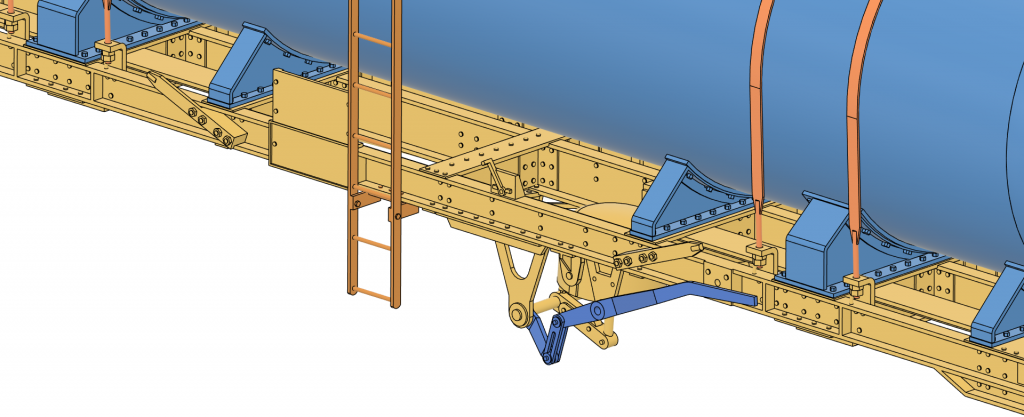
Around 1963 this type, along with all the others that weren’t built with vacuum brakes, was retrofitted with twin vacuum cylinders along with changeover levers. The D/C brakegear was removed and in its place a variation on the links from the BR clasp brake system was fitted along with conventional brake levers, one of which had lifting link. The main brake cross shaft was fitted centrally which gave the whole thing a bit of a squashed look.
The bogies gained roller bearings in place of the oil journals. The roller bearings fitted were of a non-standard pattern being fixed behind the sideframes rather than bolted to the front. The buffers also changed to 1’ 8 ½” Oleo types. Both of these changes are likely to have occurred at the same time as retrofitting. They had definitely occurred by the end of the 1960s.
T203 is preserved.
Batch 2A – Built Hurst Nelson 1959, Chas Roberts 1961
Numbered T209 – T215 (Hurst Nelson T209-212, Chas Roberts T213-5)
The biggest visual changes occurred between type 1 and type 2A. Those that followed were a variation on this new type.
The type 2As were rated at 36T load though tank would appear to be the same. This may have been down to a reduction in overall weight allowing for a slightly higher load or the tank may have been slightly bigger. They were, though still substantial, not quite as massively built as the type 1s.
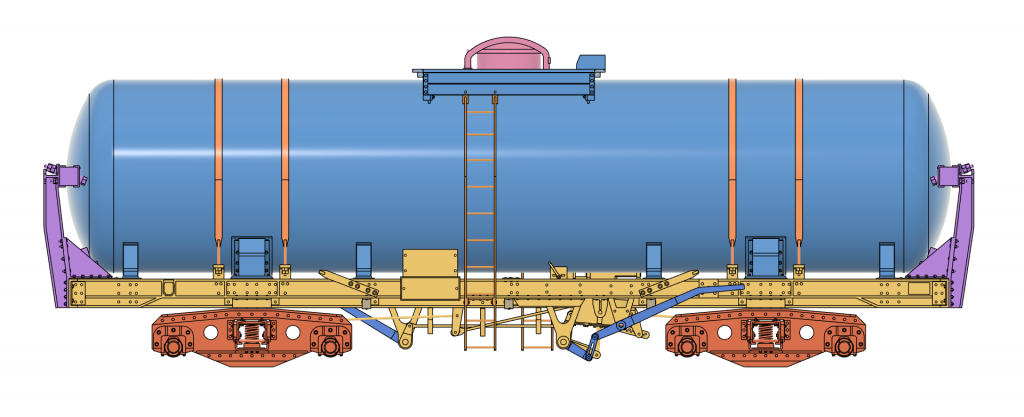
The underframes still had 12” headstocks and longitudinal framing but the solebars were reduced to 8” though tapered out to 12” around the headstock, and the transverse framing now tapered from the main longitudinals to the solebars. Constructions was, like the type 1s, riveted. They were built unfitted with conventional lever brakes, the two brake levers acting independently, one on each bogie. They were through vacuum piped, a sign of things to come. Buffers were Oleo and they were fitted with screw couplings.
The tank now sat upon 6 less substantial steel saddles that were riveted together from plate and angle. There were still timber baulks at the bottom of the tank ends, but they were smaller and sat within the end stanchion setup. The cross beams still came with substantial steel support but there were now only two stanchions per end. They were still heftily built though with rectangular strengthening plates attached to the top of the underframe.
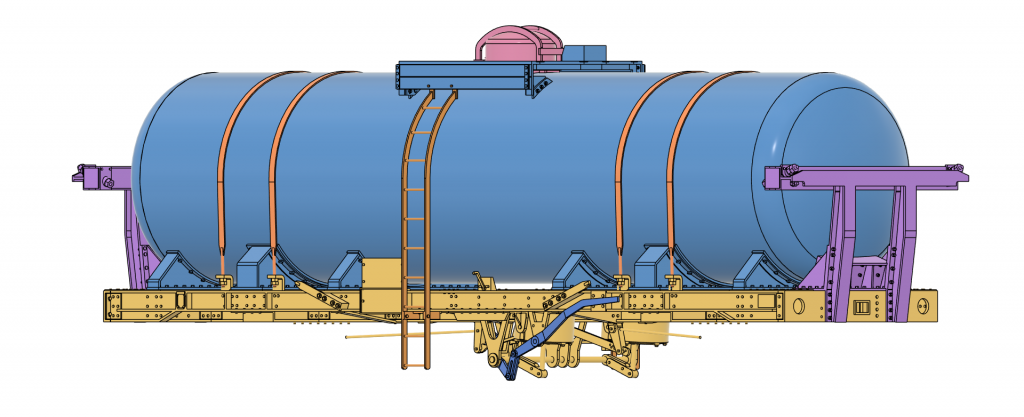
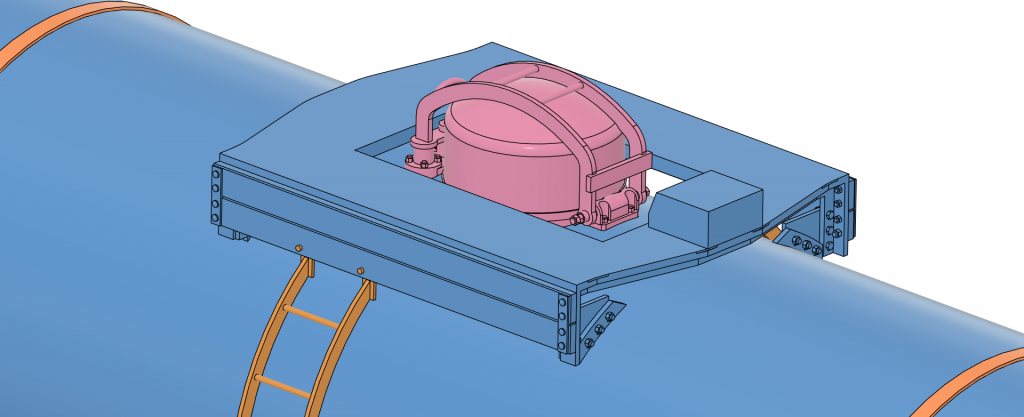
The manhole remained the same, but the platform was now tapered in the corners and it was fitted with both a manhole lid rest and wooden ‘weatherboards’ on the sides. The ladders were attached towards the bottom of these weatherboards, this time offset to the left on each side.
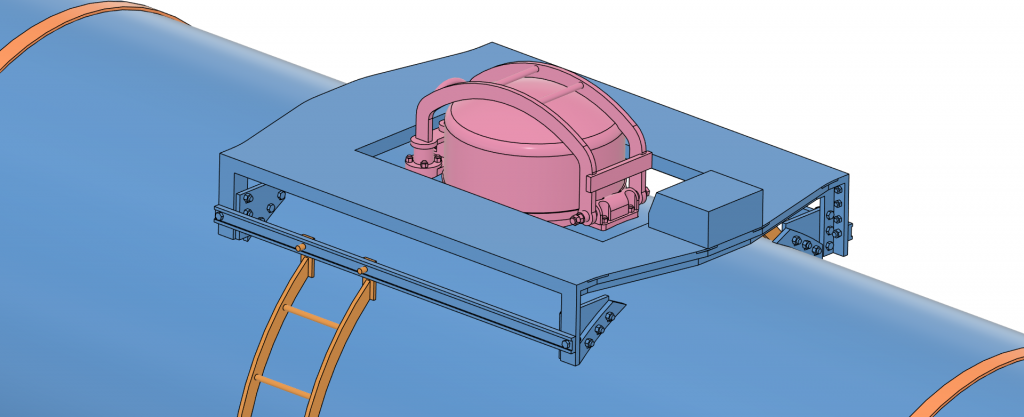
Over time the weatherboards were removed and replaced by a simple length of steel channel to support the ladders.
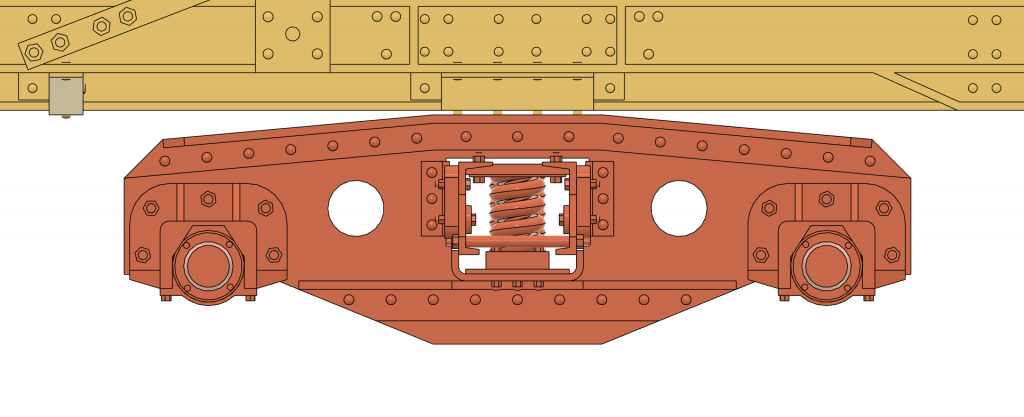
The bogies were the same type as those fitted to the type 1s, though they now had holes in the sideframes and they were fitted from the off with more conventional roller bearings, as found on the standard BR plate freight bogies.
As with the type 1s, they were retrofitted around 1963 with a similar version of the BR clasp brake linkages and lifting link brake levers on one side. The brake cross shaft was now offset which gave things a more spacious feel. The transverse framing wouldn’t allow for this neater arrangement on the type 1s, hence the difference.
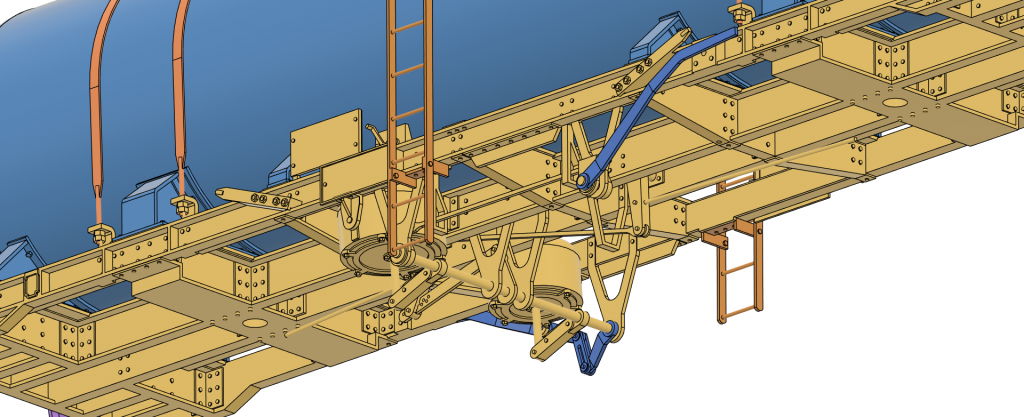
This type was notable in that it contained the last wagons built by Hurst Nelson.
Batch 2B – Built Central Wagon 1961
Numbered T216-27
This type was very similar to the type 2As but there were not identical as Peter Fidczuk would have you believe.
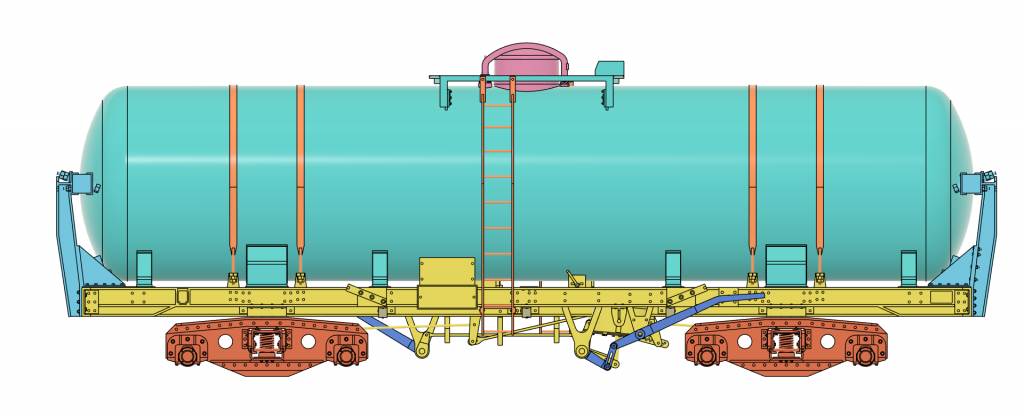
The underframe had the same arrangement of headstocks, framing and solebars but it was more welded in construction. It certainly wasn’t all welded but there was more used, for example the various plates covering bits of the top of the underframe were now welded on rather than riveted. The saddles were a slightly different profile and also more welded in construction with angled strengthening ribs as found on anchor mounted tank wagons.
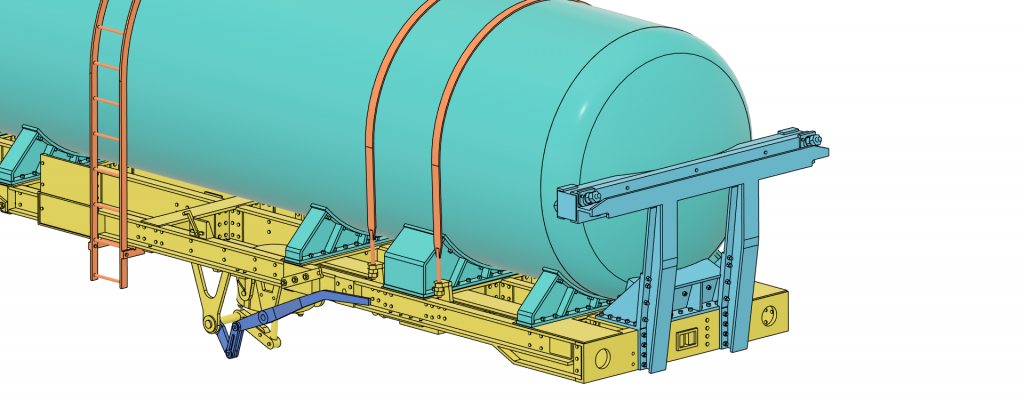
The end stanchions were similar but again a bit more welded…
The platforms remained the same but there were no weatherboards fitted this time, and the ladders were now hung off the platform framing.
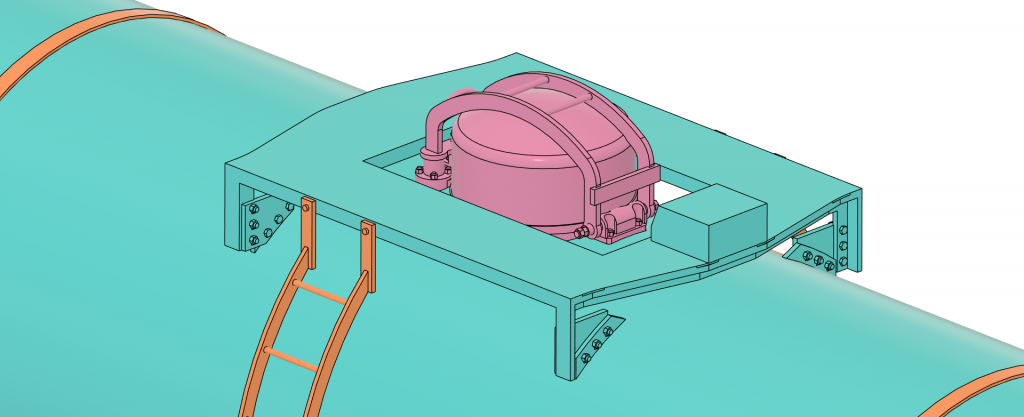
The bogies were the same.
As with the type 2As they were built through piped and retrofitted around 1963 with the same brakegear arrangement.
Batch 3 – Central Wagon 1963
Numbered T228 – T239
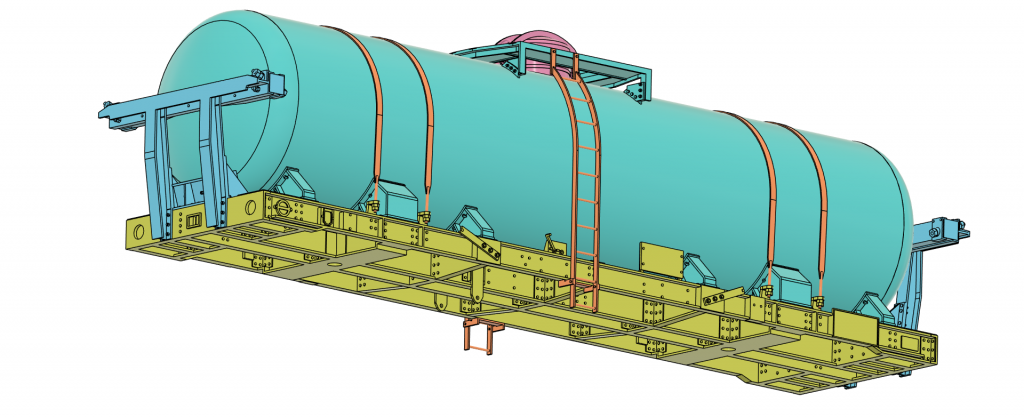
This type had a similar underframe to the type 2Bs but they now had 10” solebars. They were vacuum braked from new with twin vacuum cylinders and changeover levers and the same arrangement of BR clasp brake links and brake levers that were retrofitted to the type 2As and 2Bs.
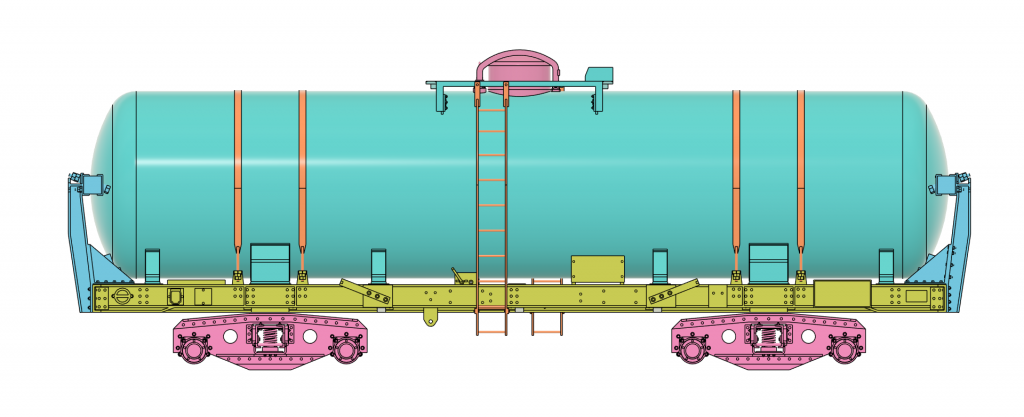
Above the underframe the tank, saddles end stanchions and platform were the same as the type 2Bs with just a minor tweak to the ladder to suit the new solebar depth.
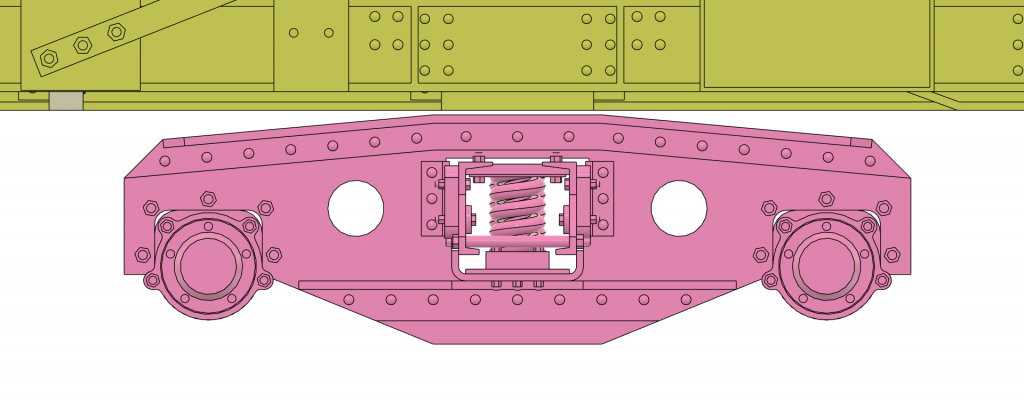
Bogies changed again. These were similar to batch 1 with non-standard roller bearings but now with holes in plate frames.
These were the last traditionally stayed tank wagons built in the UK.
Conclusion
As with a lot of wagons, and has hopefully been shown here, these Murgatroyd’s bogie liquid choline wagons were not all the same. Some of these changes are obvious, big design changes or things like retrofitting are quite obvious, but for others you need to scratch below the surface. Different works had different ways of doing things and this could subtly alter the appearance of a wagon. I find this sort of thing fascinating, and it makes life more interesting for the modeller. All of a sudden, a rake of half a dozen wagons that at a quick glance seem to be the same reveal a host of differences to those who are inquisitive and look closely. We haven’t even looked at livery variations. Perhaps I can touch on that in the future, when all this artwork starts to turn into actual models.
Justin Newitt – March 2026